Ferguson Crisis in the Classroom
Ferguson Crisis in the Classroom: An Applied Educational Psychology Perspective
Media outlets from around the world descended on Ferguson in 2014 covering the aftermath of the Michael Brown shooting and putting St. Louis in a global spotlight. News stories focused on the facts and rumors of the case, the effect on businesses, racial history of the area, civil rights and the response of law enforcement. Students and faculty members in St. Louis University’s School of Education saw one group that was not getting the media’s focus – children and youth in schools.
“After Aug. 9 we started thinking about what could we do and how can we help the kids in schools because nobody was talking about how children and teens might be affected,” said Deborah Stiles, professor of Applied Educational Psychology and School Psychology at St. Louis University. “The overwhelming majority of students in the Applied Educational Psychology programs are working in area schools – they’re on the front lines. We knew we had to take our knowledge of psychology and bring that understanding to children and youth in schools.”
The School of Education quickly created a class called “The Impact of Community Violence and Racial Strife on Children and Youth in St. Louis Schools.” Students of that class along with additional students from an Applied Research class and other Applied Educational Psychology programs worked together for more than five months discussing, studying, and writing about schools’ responses to the Michael Brown shooting and the resulting crisis in St. Louis. The investigation included analyzing data from 54 schools, reviewing Ferguson lesson plans and curricula, studying media coverage, and interviewing two inspirational school administrators in the aftermath of the Michael Brown shooting.
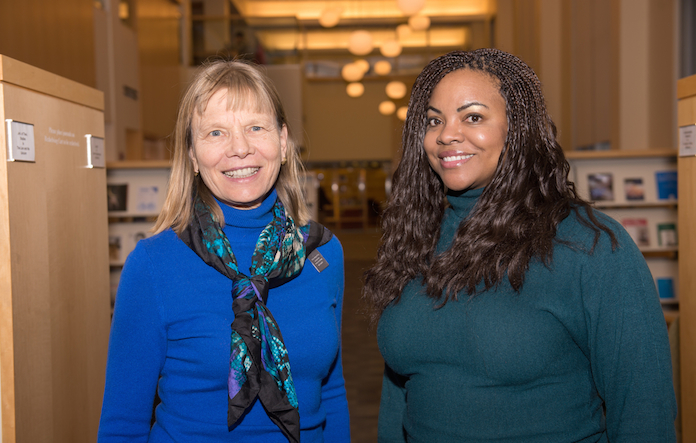
Deborah Stiles, along with Jameca Falconer, an adjunct instructor at St. Louis University, and students in the class presented the findings of the research at the 32nd Annual Winter Roundtable at Teachers College in Columbia University. The Winter Roundtable is the longest running continuing professional education program in the United States devoted solely to cultural issues in psychology and education.
“We found that most schools had a minimal response to the Ferguson crisis,” said Stiles. “Some schools had a moment of silence ‘for peace’; some told staff that they should change the subject if Ferguson were to come up in the classroom.”